
Bone Health After Menopause: Questions About Screening and Daily Habits
Bone health deserves attention after menopause. Discuss your fracture history, risk factors and whether bone-density screening is appropriate, alongside movement, nutrition and fall prevention suited to your health.
In this article
Bone health after menopause is worth bringing up before you have a fracture, not after. Estrogen drops. Bone turnover changes. Your job is not to diagnose yourself; it is to bring the right history, questions, and goals into a clinician-led conversation.
If you are exploring hormone care or menopause care in the Orlando area, bone health belongs in the same discussion as sleep, hot flashes, strength, falls, nutrition, and long-term mobility. Clear history. Clear questions. A plan that fits you.
Why bone health becomes a useful midlife discussion
Do your risks change after menopause?
Yes. After menopause, lower estrogen can speed bone loss, which can raise the chance of postmenopausal osteoporosis over time. Bone loss is usually silent, so you may feel fine while your fracture risk is changing.
That is why this conversation should not wait for pain. ACOG explains that osteoporosis can weaken bones and increase fracture risk, and that menopause-related estrogen changes are part of the bone-health picture ACOG.
This does not mean every person needs the same test, supplement, or treatment. It means your clinician should connect your menopause stage, medical history, fracture history, medicines, nutrition, movement, balance, and personal goals.
For many people, the practical goal is simple: stay strong, steady, and independent. Keep walking. Keep lifting groceries. Keep traveling. Keep getting up from the floor when life asks you to.
A good visit can organize the topic into three buckets:
-
Risk: What makes bone loss or fracture more likely for you?
-
Screening: Would bone density testing or another risk tool help guide decisions?
-
Daily plan: What movement, nutrition, and fall-prevention steps are realistic for your life?
Hormones change. Care should keep up.
What fracture and family history to bring
What should you write down before the visit?
Bring any history that helps your clinician judge osteoporosis risk factors, especially fractures, family history, and medicines. The details matter because screening and supplement decisions should be individualized, not guessed from age or symptoms alone.
Use this history-to-question checklist before your appointment:
-
Previous low-trauma fractures: Have you broken a wrist, hip, spine, rib, shoulder, or ankle after a simple fall from standing height or less? Ask: “Does this fracture history change my need for bone-density testing?”
-
Height or posture changes: Have you lost height, developed a new curve in your upper back, or had unexplained back pain? Ask: “Could this suggest a spine fracture that needs evaluation?”
-
Family history: Did a parent or sibling have osteoporosis, a hip fracture, or spine fracture? Ask: “How much does my family history change my fracture risk?”
-
Menopause timing: Did menopause happen earlier than expected, or did you have surgery or treatment that affected ovarian function? Ask: “Does my menopause history change my bone-health plan?”
-
Current medicines: Bring prescription drugs, over-the-counter medicines, supplements, and past long-term medicines. Ask: “Could any of these affect bone density, balance, or fall risk?”
-
Medical conditions: Share thyroid disease, digestive disorders, autoimmune disease, kidney issues, diabetes, cancer treatment history, or eating disorder history if relevant. Ask: “Do any of my conditions raise my risk?”
-
Falls and balance: Tell your clinician about falls, dizziness, foot numbness, vision problems, or feeling unsteady. Ask: “Should balance, physical therapy, or home safety be part of my plan?”
This is not about proving something is wrong. It is about giving your clinician enough context to make a careful call.
If you already had a bone density test, bring the report, not just the message that it was “normal” or “low.” Reports may include different sites, such as hip or spine, and your clinician can explain what the pattern means.
Screening questions for your clinician
How do you ask about bone-density screening without overtesting?
Ask directly whether your personal risk profile makes bone-density screening useful now, and what decision the result would help make. Screening is most helpful when it answers a clear clinical question.
You can use these questions in the visit:
-
“Based on my history, am I at average or higher fracture risk?” This opens the door to a real risk conversation, not a generic lecture.
-
“Would a bone mineral density test, such as a DXA scan, help guide my care?” ACOG describes DXA as a common way to measure bone mineral density, but whether and when it fits should be based on your risk level and clinical context ACOG.
-
“If I have results, what do they mean in plain language?” Ask whether the result shows normal bone density, low bone density, or osteoporosis range, and how that connects to fracture risk.
-
“How often should this be reassessed for me?” The answer may depend on your prior result, risk factors, medicines, and whether your health situation changes.
-
“Should hormone therapy be part of this discussion, or are other options more appropriate?” Hormone therapy decisions are individualized. Bone health may be one factor, but it is not the only factor. Your clinician should discuss benefits, risks, alternatives, and follow-up based on your situation.
-
“Do I need supplements, and if so, what type and amount are safe for me?” Do not start or increase supplements just because a friend did. Your diet, labs, kidney history, medicines, and risk factors can change the answer.
Clear numbers. Room for your questions.
Daily habits and fall prevention
Bone health is not only a scan. It is also what your bones and muscles experience every week.
ACOG’s menopause guidance supports balanced nutrition, weight-bearing movement, strength training, and balance work in midlife; its osteoporosis guidance also connects prevention with fall reduction ACOG ACOG. That combination matters. Stronger bones help. Stronger legs help. Fewer falls help.
Start with habits you can repeat:
-
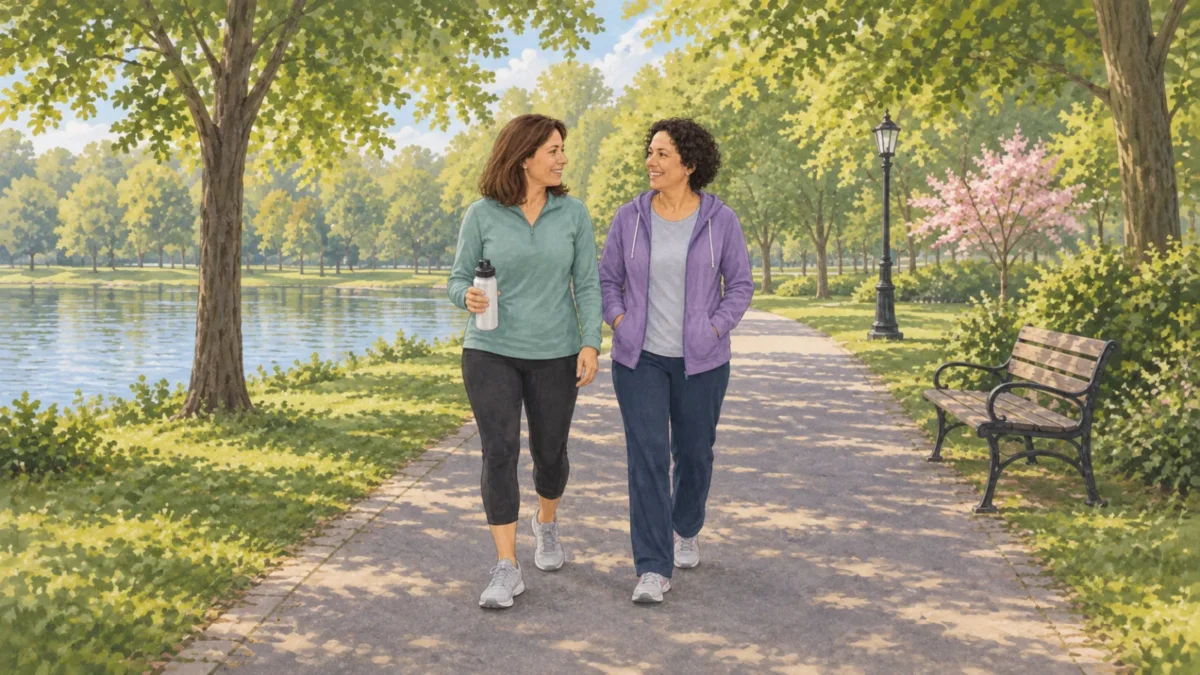
Walk with purpose. Brisk walking is weight-bearing and practical for many people.
-
Build strength. Use body weight, bands, machines, or weights if appropriate for you.
-
Train balance. Yoga, tai chi, simple balance drills, or physical therapy may help if you feel unsteady.
-
Eat enough protein and nutrient-dense foods. Bones need more than one nutrient. Meals should support muscle, energy, and overall health.
-
Review alcohol and smoking honestly. Both can affect bone and fall risk.
-
Make the home safer. Improve lighting, remove loose rugs, secure cords, use handrails, and keep common items within easy reach.
-
Check vision and footwear. Small fixes can lower fall risk.
-
Review medicines that cause dizziness or sedation. Do this with a clinician before changing anything.
Your plan should feel specific enough to follow. Ask which activities fit your health, current ability and goals, then choose a routine you can repeat. Discuss pain, balance concerns or previous fractures before trying unfamiliar exercises.
Direct Preventive Care is based in Winter Garden and serves the Orlando area with virtual and in-person care. Bring your fracture history, medicine list and previous results to discuss how bone health fits your wider menopause concerns. Ask where any recommended screening or specialist care would take place rather than assuming a particular test is available onsite.
If you want a calmer way to sort through hormone-care options, prevention, and cost questions, start with DPC’s women’s hormone care or menopause care. Bring your questions and ask which next step fits your individual history.
This article provides general education. Individual treatment decisions belong in a conversation with a qualified clinician.