
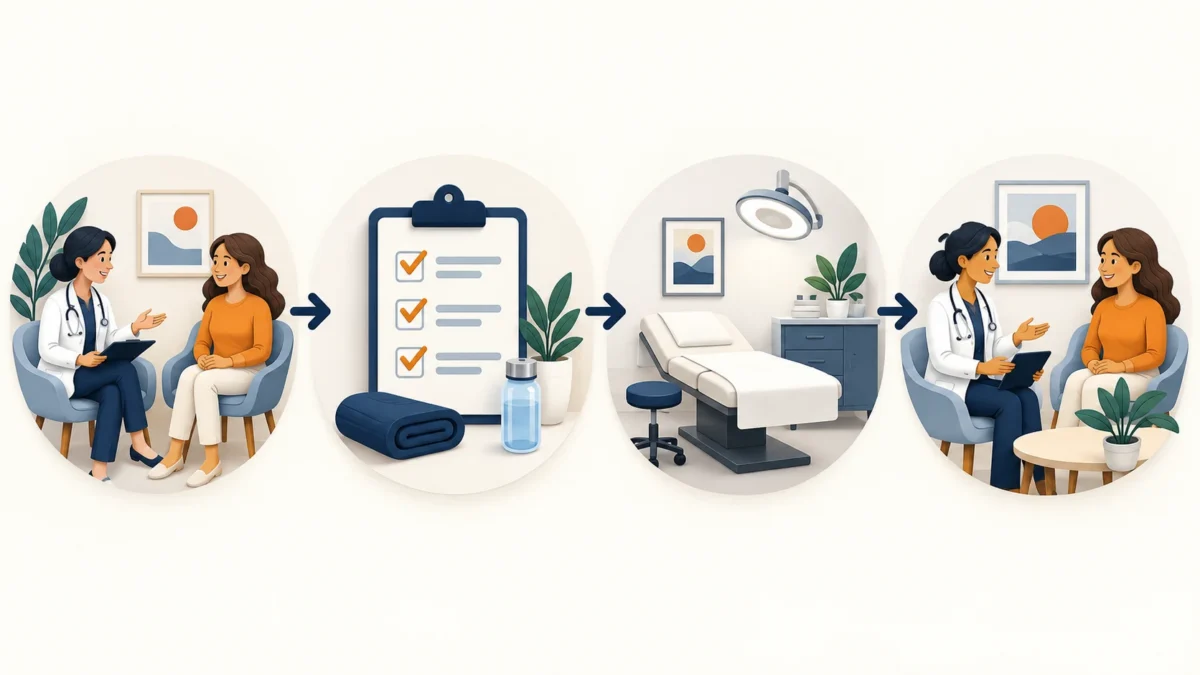
How Are Hormone Pellets Inserted? What to Expect
Hormone pellets are placed under the skin during a brief in-office procedure after evaluation and preparation. Exact technique and aftercare should come from the clinician performing the procedure.
In this article
- How are hormone pellets inserted?
- Hormone pellets in plain language
- The consultation comes first
- Labs help guide the conversation
- What should you do before the insertion visit?
- The in-office insertion experience
- Immediate recovery after insertion
- Follow-up and monitoring matter
- Questions to ask before choosing pellet therapy
- A grounded next step in Winter Garden
Hormone pellet insertion is an in-office medical procedure where a treating clinician places small hormone pellets under the skin through a small opening. The visit is not something you do at home, and it should never start with a one-size-fits-all recommendation.
At Direct Preventive Care in Winter Garden, serving the Orlando area, the point is simple: understand your symptoms, review your labs, talk through your options, and monitor your plan over time. This article is educational only. It is not personalized medical advice.
How are hormone pellets inserted?
Hormone pellets are inserted by a treating clinician, not by the patient. In general, the clinician selects an insertion area, prepares you for the procedure, makes a small opening in the skin, places the pellet beneath the skin, and covers the area according to their written instructions.
That is the short answer. The more useful answer is what happens before and after.
Good hormone care is not just the moment of insertion. It includes the conversation, the lab review, the decision-making, the procedure plan, and the follow-up. Medical groups such as The Menopause Society emphasize that hormone therapy decisions should be individualized and revisited as your health, goals, and needs change. (menopause.org)
If you have been searching phrases like “how are hormone pellets inserted,” “hormone pellet insertion,” or “biote pellet insertion,” you are likely trying to picture the real visit. That is fair. You should know what you are walking into before you book.
Hormone pellets in plain language
Hormone pellets are small implants placed under the skin by a clinician. Depending on the plan, they may contain hormones such as testosterone or estradiol. Pellet therapy is one delivery method among several hormone-care options, and it is not automatically the right fit for every person.
ACOG describes hormone therapy as medical treatment that may be used for symptoms related to menopause and perimenopause, while MedlinePlus notes that testosterone therapy may come in several forms, including implants, when clinically appropriate. (acog.org)
Plain language matters here. “Subcutaneous” simply means “under the skin.” “Insertion” means the clinician places the pellet beneath the skin so it can remain there as part of the treatment plan.
At DPC, prospective patients can learn more about the service on our hormone pellet therapy page. That page is a starting point. Your actual plan should come from an individualized evaluation.
The consultation comes first
The consultation is where the real decision begins. Not the procedure room. Not an online quiz. Not a trend.
During a hormone-care consultation, your clinician should want to understand what has changed for you. That may include energy, sleep, mood, menstrual changes, libido, hot flashes, muscle changes, or other concerns you want to discuss. You do not need to have perfect words for it. You just need space to explain what you are noticing.
A useful visit may include:
- Your main symptoms and how long they have been present
- Your health history and current medications
- Prior hormone treatment, if any
- Your goals for care
- Lab work that may help guide the discussion
- A review of hormone-care options, not just pellets
- A clear explanation of cost before you decide
Clear numbers. Room for your questions.
Because every person’s health picture is different, DPC provides individualized evaluation and monitoring in the context of hormone care. That means the plan should be built around you, then followed over time.
Labs help guide the conversation
Labs do not replace your story, but they can add important context. They may help your clinician understand hormone levels and other health markers that could affect the plan.
At DPC, lab testing is part of the broader evaluation process when clinically appropriate. You can learn more about available testing through our labs page.
The key is interpretation. A number by itself does not know how you feel. A symptom list by itself may not show the full picture. The work is putting both together.
Before moving toward hormone pellet insertion, ask what labs are being considered, why they matter, and how the results may change the plan. If the answer is vague, pause. You deserve a clear explanation.
What should you do before the insertion visit?
Preparation should follow your treating clinician’s instructions. Those instructions are the source of truth for your procedure.
This article will not give a do-it-yourself procedure guide, and it will not replace the directions you receive from your clinician. Hormone pellet insertion is a medical procedure performed by a treating clinician in an appropriate care setting.
Helpful patient preparation is mostly about clarity:
- Confirm the reason for treatment. Know what symptoms, lab findings, and goals are driving the plan.
- Ask what hormone is being considered. Understand what is being used and why.
- Review alternatives. Pellets are one option. Ask what other routes or approaches may fit your situation.
- Discuss total cost. Ask what is due, what may come later, and how follow-up is handled.
- Get written instructions. Follow the clinician’s directions before and after the visit.
- Plan your day realistically. Ask whether you should adjust activity, work, exercise, or travel based on your clinician’s instructions.
Your care. Your questions. A plan that fits.
The in-office insertion experience
The insertion itself is typically handled in the office by the clinician. You will be positioned for the procedure, the clinician will prepare the selected area, and the pellet will be placed under the skin through a small opening.
The exact procedure details are controlled by the treating clinician. That includes the insertion area, the method used, what you may feel during the visit, how the area is covered, and the written instructions you receive afterward.
You should not have to guess what is happening. A good visit includes calm explanations before each step, space for questions, and clear instructions before you leave.
If you are specifically comparing BioTE pellet insertion with other hormone pellet approaches, ask direct questions. Is the product or method being recommended for you? Why? What monitoring is planned? What happens if your needs change?
Those are reasonable questions. You are allowed to ask them.
Immediate recovery after insertion
After the insertion, your clinician should tell you how to care for the area and what activity limits to follow. Those instructions matter more than anything you read online.
You may be told to keep the area protected, adjust activity, or watch the insertion area in the way your clinician describes. Follow the written directions from the office. If anything feels unclear, ask before you leave or call the clinic for clarification.
Do not copy another person’s aftercare plan. Their procedure, health history, and clinician instructions may not match yours.
For Orlando-area patients with busy schedules, it is also smart to ask practical questions ahead of time:
- Can I drive myself, or should I plan support?
- When can I return to work?
- What activity should I avoid, and for how long?
- What should I do if the dressing loosens?
- Who do I contact with questions after the visit?
Simple questions prevent confusion. That is good care.
Follow-up and monitoring matter
Hormone care should not end when the pellet is placed. Follow-up helps your clinician understand how you are doing and whether the plan still fits.
Monitoring may include a symptom check, review of concerns, discussion of goals, and lab follow-up when clinically appropriate. The Menopause Society notes that hormone therapy decisions can be reevaluated and adjusted over time as needs change. (menopause.org)
This is where individualized care matters. If your goals change, your plan may need to change. If your labs or symptoms do not line up with the current approach, that should be discussed.
Hormones change. Care should keep up.
Questions to ask before choosing pellet therapy
You do not need to become a hormone expert before your consultation. You do need enough information to make a grounded decision.
Bring questions like these:
- What are we trying to improve or address?
- What labs are useful before deciding?
- Why might pellets fit my situation?
- What other hormone-care options should I understand?
- How will we monitor the plan?
- What costs should I expect before, during, and after treatment?
- Who should I contact if I have questions after insertion?
- What would make us pause, adjust, or choose a different option?
The goal is not pressure. The goal is clarity.
A grounded next step in Winter Garden
If you are exploring hormone pellet insertion in the Orlando area, start with a conversation, not a commitment. Direct Preventive Care in Winter Garden can help prospective patients understand the evaluation process, lab considerations, treatment options, and follow-up approach without rushing the decision.
This article is for education and editorial review only. Your actual care should be based on an individualized clinical conversation with your treating clinician.
If you are ready to ask questions, compare options, and understand whether hormone pellet therapy may fit your situation, contact Direct Preventive Care for a calm consultation conversation.
This article provides general education. Individual treatment decisions belong in a conversation with a qualified clinician.