
What Signals the End of Menopause? Understanding Postmenopause
Natural menopause is identified after twelve consecutive months without a period when another cause does not explain it. Postmenopause follows that milestone; it does not mean every symptom disappears on the same day.
In this article
- When is natural menopause considered complete?
- The three parts to keep separate
- Perimenopause, menopause, and postmenopause compared
- Why bleeding patterns can be misleading
- What symptoms can continue into postmenopause?
- Bleeding after menopause needs evaluation
- Appointment note template
- Common menopause questions
- A clear next step
- Sources
Menopause is not confirmed in the moment. It is identified by looking back: 12 consecutive months without a period, when another cause does not explain the missing periods. Postmenopause comes next, and your symptoms, questions, and preventive care still matter.
When is natural menopause considered complete?
Natural menopause is identified retrospectively after 12 consecutive months without a menstrual period, as long as pregnancy, medications, hormonal contraception, surgery, or another medical reason does not better explain the change. The National Institute on Aging describes true menopause as something that cannot be confirmed until one year after the final period, and NICE uses the same 12-month marker when appropriate. (nia.nih.gov)
That means menopause is a calendar milestone, not a symptom finish line.
You may still have hot flashes, sleep disruption, mood changes, vaginal dryness, urinary symptoms, low libido, brain fog, joint discomfort, or weight and energy changes after that 12-month point. Symptoms can continue into postmenopause, so do not assume you are “done” just because the calendar says you have crossed the line.
The three parts to keep separate
It helps to separate the menopause conversation into three lanes. They overlap, but they are not the same.
-
The calendar milestone: 12 months in a row without a period, with no other cause explaining it.
-
The symptom experience: what you feel before, during, and after that milestone.
-
The health follow-up: the ongoing care that helps you review symptoms, bleeding changes, sexual health, sleep, mood, bones, heart and metabolic risk factors, and screening needs with a clinician.
Clear lanes. Fewer assumptions.
This is also why online checklists can be frustrating. They may describe common patterns, but they cannot tell your full story. Some readers need individualized assessment, especially if bleeding patterns are unclear, symptoms are severe, periods stopped early, or surgery or hormone use changed the usual signals.
Perimenopause, menopause, and postmenopause compared
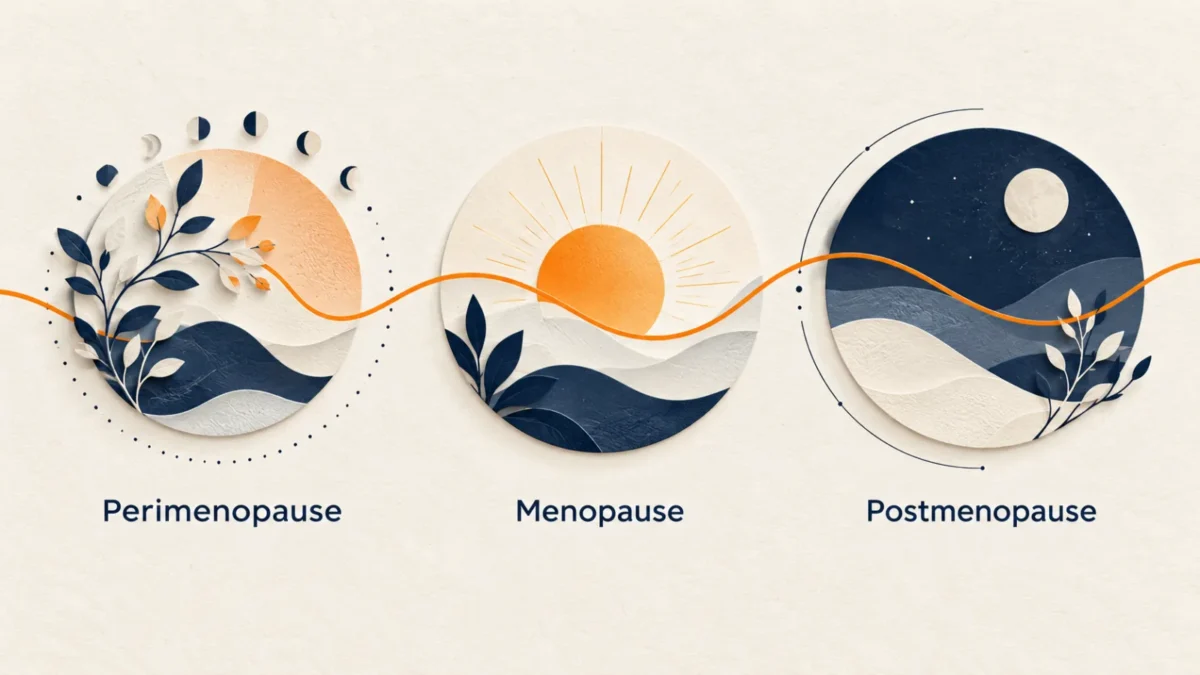
Perimenopause, menopause and postmenopause describe related stages of a life transition. Keeping the terms separate helps you understand the timeline.
|
Stage |
What it means |
What may happen |
|---|---|---|
|
Perimenopause |
The transition leading up to menopause |
Periods may change. Symptoms may start or fluctuate. Pregnancy may still be possible. |
|
Menopause |
The point confirmed after 12 straight months without a period |
It is confirmed by looking back, not by one single day of symptoms. |
|
Postmenopause |
The years after natural menopause |
Periods have stopped, but symptoms and preventive health needs may continue. |
These terms describe timing. They do not predict exactly how you will feel.
Why bleeding patterns can be misleading
Bleeding is useful information, but it is not always simple.
Hormonal contraception can create lighter bleeding, irregular bleeding, or no bleeding at all. Hormone therapy can also affect bleeding patterns. A hysterectomy may remove periods entirely, even if the ovaries are still changing over time. NICE specifically notes that menopause identification is different for people using hormonal contraception or those who have had a hysterectomy. (nice.org.uk)
So if your period pattern does not give a clean answer, that does not mean you are doing anything wrong. It means your clinician may need more context: your symptoms, history, medications, surgeries, and goals.
What symptoms can continue into postmenopause?
Postmenopause follows natural menopause, but symptoms do not always stop on schedule. Common concerns to discuss with a healthcare provider include:
-
hot flashes or night sweats
-
poor sleep or waking often
-
mood changes, anxiety, or irritability
-
vaginal dryness or pain with sex
-
urinary urgency, frequency, or recurrent discomfort
-
lower libido or sexual discomfort
-
brain fog or trouble focusing
-
fatigue, body composition changes, or joint aches
These symptoms deserve a real conversation, not a quick dismissal. Treatment choices should depend on your health history, preferences, risk factors, exam findings when needed, and what you want help with most.
At Direct Preventive Care, our Women’s Hormone Health and menopause care visits are built around that kind of clinical conversation in Winter Garden and the Orlando area. If a delivery method is part of your questions, DPC’s hormone pellet overview explains why that discussion belongs in the context of an individualized evaluation. (directpreventive.com)
Bleeding after menopause needs evaluation
Any bleeding after menopause should be checked by a clinician. ACOG advises seeing an ob-gyn if bleeding occurs after menopause so the cause can be found and addressed. (acog.org)
This includes spotting, pink or brown discharge, bleeding after sex, or bleeding that seems light. Do not wait to see if it keeps happening. Bring the details: when it started, how much, whether there was pain, and any hormones or medications you use.
You can read ACOG’s patient guidance here: Bleeding After Menopause.
Appointment note template
Use this before your visit. Short notes help you get clearer answers.
My main concern: Example: hot flashes, sleep, mood, dryness, bleeding, libido, weight, fatigue.
Period history: Last period date if known. Any spotting since then. Any contraception, hormones, or surgery that changed bleeding.
Symptoms I want to discuss: List your top three. Include when they started and what makes them better or worse.
Current medications and supplements: Include prescriptions, over-the-counter items, and hormones if used.
My top questions:
-
Am I likely in perimenopause, menopause, or postmenopause?
-
What evaluation makes sense for my situation?
-
What are my options, costs, and follow-up steps?
Common menopause questions
Can a blood test prove menopause?
Not always. NICE recommends identifying menopause without laboratory tests in otherwise healthy people age 45 or older with typical symptoms when the history is clear. Testing may be considered in selected situations, but lab results alone should not replace the full clinical picture. (nice.org.uk)
Does postmenopause mean symptoms are over?
No. Postmenopause means you are past the 12-month menstrual milestone. Symptoms may improve, continue, or change, so ongoing follow-up still matters.
Should I keep seeing a clinician after menopause?
Yes. Menopause is a transition point, not the end of care. Follow-up gives you space to review symptoms, bleeding concerns, sexual health, mood, sleep, and prevention priorities with someone who can connect the pieces.
A clear next step
If you are trying to understand postmenopause, hormone-care options, evaluation, and total cost, you deserve a calm visit without pressure. Direct Preventive Care is a direct-pay practice in Winter Garden serving the Orlando area with in-person and virtual care. Bring your notes, your questions, and your goals. We can talk through what fits and what does not.
Sources
This article provides general education. Individual treatment decisions belong in a conversation with a qualified clinician.